Ahead of the curve: Moving the Culture and the market
Brands respecting cultural nuance isn’t just good marketing, it’s driving effective strategies on where and how to show up and delivering bottom line impact. With an inclusive approach and a data-driven strategy, diving deeper into Black audience trends can be a guidepost to where the culture and the market are headed.
For example, Black audiences are 4x more likely than the average consumer to be very interested in The WNBA.1 As the growth of women’s sports’ audience engagement and sponsorship value continue to rise, so has the price point for brand investment according to Nielsen Sports.
With a projected buying power of $2.1 trillion in 2026, Black consumers deliver significant economic impact.2 Paired with an appetite for media engagement, Black America also represents one of the most addressable audiences across the media landscape. 67% of Black consumers agree they pay more attention to brands that reflect their culture compared to 46% overall.3
The Digital Disconnect
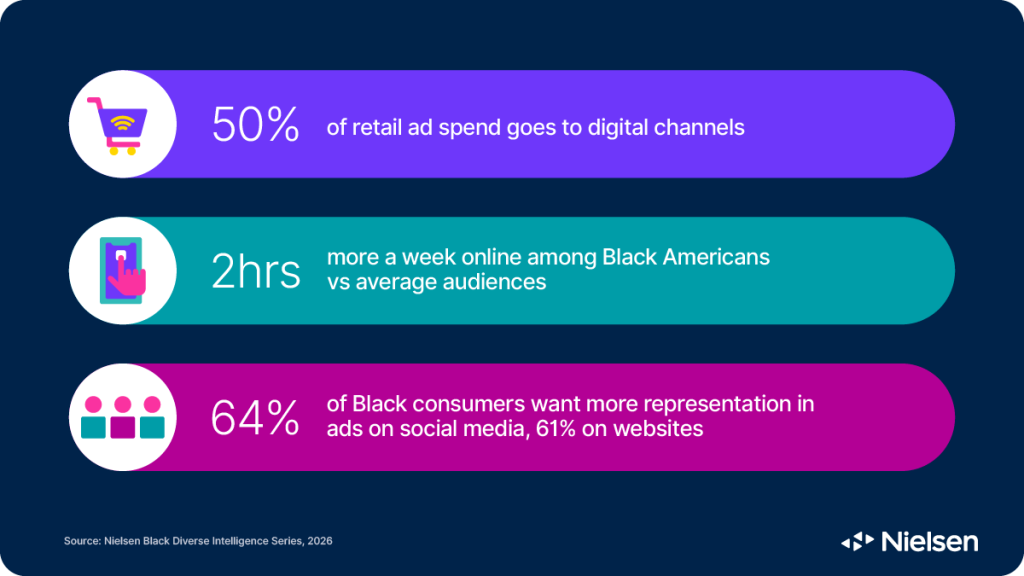
In the retail category alone, Nielsen Ad Intel data shows half of ad spend goes to digital channels. Black consumers are a key audience online, averaging two hours more a week with digital media than the total audiences.4 However, the ads Black consumers encounter don’t always connect. 64% of Black audiences agree they want more representation in ads on social media and 61% on websites.5
Blurred lines of content, creators platforms and campaigns
Savvy marketers aren’t just reaching the Black consumer—they are connecting with intersectional and nuanced Black identities. Black creators are an essential piece of the strategy to dive deeper with Black Americans as audiences embrace the blurred lines across media platforms.
- Black listeners are the most likely to watch their podcasts, naming YouTube as the platform they use most often to tune in.6
- 70% of Black Gamers are more likely to watch a show due to favorite creators’ involvement vs 62% of Gamers overall7
- Black American listeners are 32% more likely to listen to podcasts hosted by a radio personality.8
The impact of creators to connect and drive action
The inclusive creator approach is not just driving content engagement. Black consumers are also more likely to take action. 52% of Black audiences agreed they’re more likely to purchase when a brand partners with creators, personalities, or organizations connected to their fandoms and interests compared to 45% overall.9 That number climbs even higher when you look at different Black identities within the community.
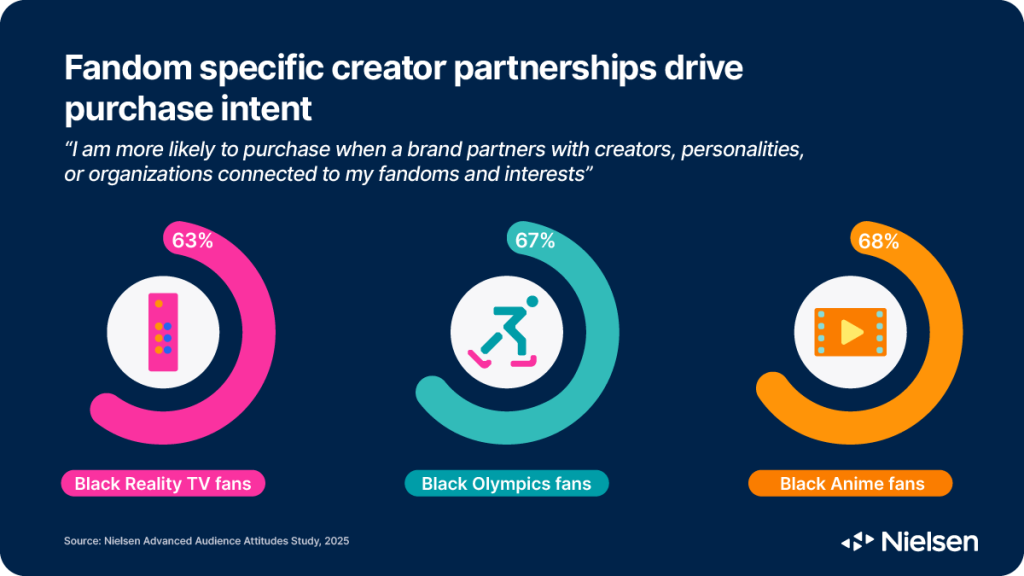
Keep in mind that Black consumers are often looking for brand alignment before buying a brand and the same rings true for Black creators evaluating partnerships. More than half of self-identified, Black content creators have actively changed buying habits with a brand because of its values or actions. Overall, 70% of Black consumers now report they will stop buying from brands perceived as devaluing their community—up from 66% in 2023.10 This makes measuring outcomes like attention and sentiment as essential for advertisers to understand impact.
Connect with the culture to earn spend
No matter the platform or messenger, Black consumers are prioritizing their dollars and their attention where they feel seen, heard and valued. But the foresight of where their focus is headed next—and why—can help content developers and brands meet the evolving expectations of Black audiences to win with them long term.
For more detailed insights on ways to connect with the Black audience, download our 2026 Diversity Intelligence Series report: The Black influence How Black culture & identity drive the market.
Sources
1 Nielsen Scarborough USA+ 2025
2 Selig Center for Economic Growth
3 Nielsen Attitudes on Representation Study, 2025
4 Nielsen Black Diverse Intelligence Series, 2025
5 Nielsen Attitudes on Representation Study, 2025
6 Nielsen Scarborough Podcast Recontact Study, 2025
7 Nielsen Advanced Audience Attitudes Study, 2025
8 Nielsen Scarborough Podcast Recontact Study, 2025
9 Nielsen Advanced Audience Attitudes Study, 2025